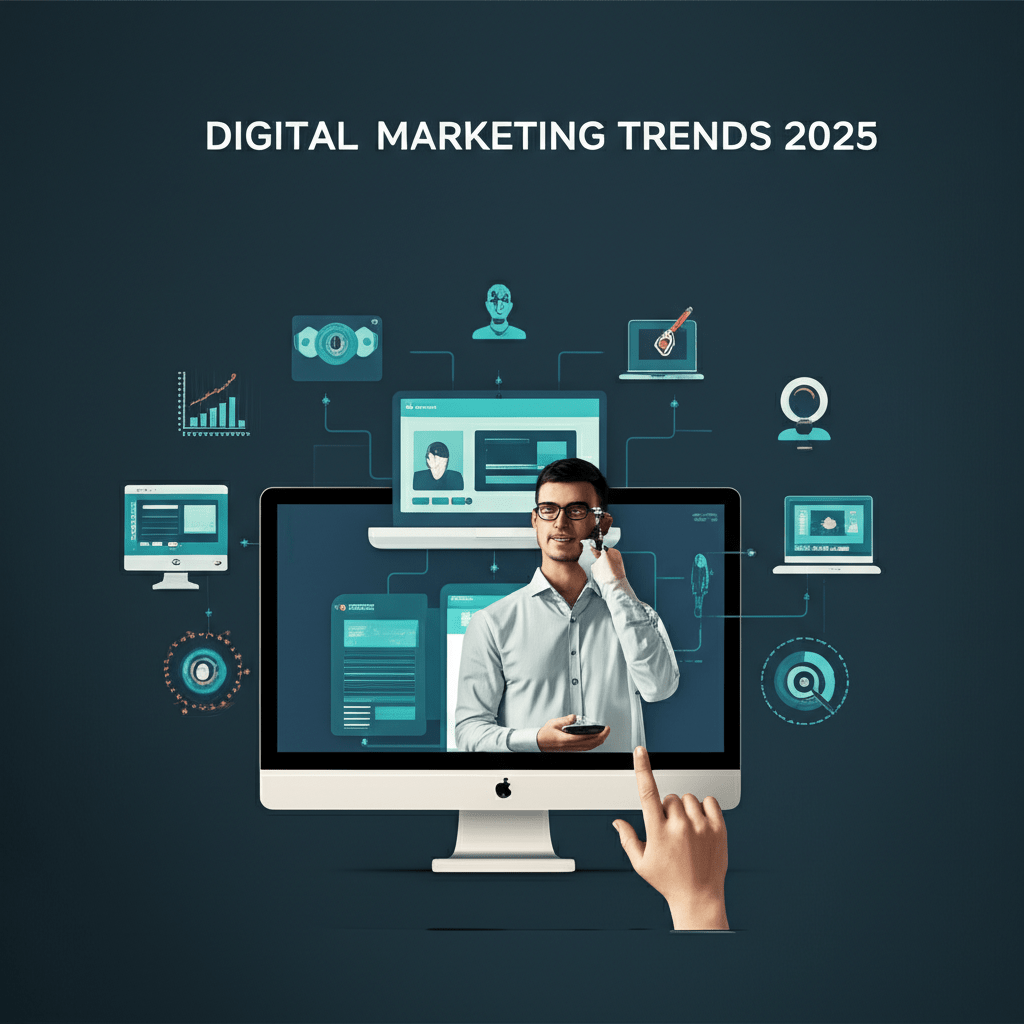

A customer visits your website twice, watches a product video, and then leaves without buying. A useful follow-up could bring that person back, but a generic message may feel irrelevant. This guide explains the most important digital marketing trends 2025 businesses should have planned for, including AI personalization, marketing automation, search, social media, and immersive experiences.
These are not instructions to adopt every new tool at once. They are practical shifts in how people discover brands, compare options, and decide whether to trust a business. You will learn what each trend means, where it can help, what mistakes to avoid, and how to test an idea before committing a large budget.
What digital marketing trends 2025 mean for your strategy
A trend matters only when it changes a customer decision or makes your work more effective. For example, a retailer may use helpful product recommendations, while a local service company may focus on answering search questions clearly. The right choice depends on your audience, goals, data, staff, and budget.
Think of your marketing plan as a small garden. You do not plant every seed available; you choose a few that suit the soil, water them consistently, and remove what does not grow. The same approach works here: select one useful experiment, measure its result, and expand only when the evidence supports it.
- Start with the customer problem: identify a question, delay, or frustration you can solve.
- Choose a measurable goal: track actions such as qualified leads, completed purchases, email engagement, or returning visitors.
- Protect trust: explain how you use customer information and give people reasonable control over communications.
- Review the basics: a clear offer, fast website, useful content, and reliable service matter more than a fashionable tool.
AI personalization needs useful data and human judgment
AI personalization uses software to adapt content, offers, or recommendations to a person’s likely needs. It can help a team notice patterns across many customer interactions, but it does not replace strategy or responsible review.
Where AI personalization can help
A marketing team might group visitors by the pages they viewed, the products they compared, or the questions they asked. The website could then show a relevant guide, while an email system could suggest the next useful step. The goal is not to make every message sound different; it is to make each message more helpful.
Consider a software company with two audiences. A new visitor may need a plain-language introduction, while an existing customer may need setup guidance or an upgrade comparison. Showing the same promotion to both people wastes attention. A simple audience rule can create a better experience without requiring an elaborate system.
Common mistakes with AI
The biggest mistake is treating a prediction as a fact. A system can identify a pattern, but a pattern may be incomplete, outdated, or biased. Keep a person involved in important decisions, check outputs for accuracy, and avoid using sensitive information unless you have a clear lawful reason and appropriate safeguards.
Start with a narrow test. Compare a relevant welcome email with a general version, keep the offer and timing similar, and decide in advance what success means. Do not collect extra data simply because a platform makes it possible. Good personalization should feel like helpful service, not surveillance.
Marketing automation connects the customer journey
Marketing automation is software that performs planned tasks when a customer takes an action. It can send an email after a download, alert a sales representative when a qualified lead replies, or remind a customer about an unfinished registration.
Build a useful workflow
A strong workflow begins with a clear customer need. Map the stages from first contact to purchase and support, then ask what information or assistance is useful at each stage. Keep the number of messages limited and give people a simple way to change their preferences or unsubscribe.
- Choose one journey: start with a welcome sequence, lead follow-up, or post-purchase education.
- Define the trigger: use a specific action, such as a form submission or completed order.
- Write the next helpful message: explain what to do, why it matters, and where to get help.
- Add sensible conditions: stop a sales message after a purchase or change the path after a reply.
- Review the results: check conversions, complaints, unsubscribes, and signs that the workflow creates confusion.
Imagine a business that sells workplace training. Someone downloads a course outline, receives a short explanation of the program, and then gets a practical checklist. If the person requests a consultation, promotional reminders should stop and the sales team should receive the relevant context. This is cross-channel marketing used to reduce friction rather than increase noise.
Automation also needs maintenance. Offers expire, links break, regulations change, and customer questions evolve. Assign an owner to each workflow and review it regularly, especially when a product, price, or privacy notice changes.
SEO and content strategy still earn attention over time
SEO and content strategy work together: search engine optimization helps people find a page, while useful content gives them a reason to stay, trust the business, and act. Search visibility is not a substitute for a good answer. A page built only around keywords may attract a visit but fail to help the reader.
Write for search intent
Search intent means the reason behind a query. Someone searching for “how to clean a coffee maker” needs instructions, while someone searching for a specific model may need a comparison or purchase page. Match the format and detail to the question instead of forcing every topic into a sales article.
For example, a home services company could publish a guide explaining when a leaking faucet needs immediate attention, what a homeowner can safely check, and when to call a professional. The article supports the reader first and creates a natural path to request service.
- Answer the main question near the beginning.
- Use clear headings that describe the reader’s problem.
- Include original examples, steps, limitations, and safety notes where relevant.
- Link related pages so readers can continue without starting another search.
- Review older content for broken links, outdated claims, and unclear advice.
Trust also matters. Show who created the content when that context helps, explain important assumptions, and distinguish practical guidance from professional advice. If you use AI to help draft material, check every claim and add genuine subject knowledge before publishing.
Social media marketing favors useful short-form video
Social media marketing works best when it gives people a reason to watch, respond, save, or share. Short-form video can communicate a demonstration quickly, but the format is not a strategy by itself. A clear idea, recognizable voice, and consistent publishing plan matter more than chasing every platform feature.
Make short videos useful
A kitchen equipment company could show three ways to use one product, answer a common cleaning question, or compare two suitable options. A professional services firm might turn one customer question into a 30-second explanation. Each example offers practical value instead of asking viewers to decode a vague brand message.
Plan the first few seconds carefully, use captions so the message works without sound, and keep the main point focused. Invite a specific response, such as asking viewers which option they would choose. Then use comments as research: repeated questions can become future videos, guides, or product improvements.
Build communities carefully
Large reach is not the only measure of success. A smaller group that asks questions, returns regularly, and recommends your business may be more valuable than a large audience with little interest. Respond to people consistently, set clear moderation rules, and avoid pretending that paid promotion is an independent recommendation.
Use platform analytics as directional information, not as a complete picture. Combine them with website actions, customer feedback, and sales data where appropriate. A video with many views may not support the business goal, while a modest post may attract the right customer.
Augmented reality marketing should solve a real decision
Augmented reality marketing adds digital information or visual elements to a person’s view of the physical world. It can help someone picture a product in a room, preview a style, or understand how an item fits into a space. Virtual reality creates a more complete simulated environment, which can support tours, training, or demonstrations.
These tools are most useful when customers hesitate because they cannot see, measure, or experience something before buying. A furniture retailer might let shoppers preview a chair in a living room. A home improvement company could help a customer compare surface colors in a photo of the kitchen. In both cases, the technology supports a specific decision.
Use a practical test before building an experience
First, identify the uncertainty. Is the customer worried about size, appearance, fit, or how a service works? Next, test whether a simple photo, diagram, or interactive page solves the problem. If the basic version helps, an immersive feature may be worth exploring.
Do not hide important costs, limitations, or compatibility requirements. A slow experience, confusing instructions, or poor visual accuracy can reduce confidence instead of building it. Measure useful actions such as product-page engagement, qualified inquiries, completed purchases, or fewer support questions.
How to turn these digital marketing trends 2025 into a plan
You do not need five new projects. Choose one customer journey and improve it in a controlled way. The following walkthrough works for a retailer, software company, nonprofit, or service business.
- Describe the audience: write down who you want to help and the problem they are trying to solve.
- Find the weak point: look for a drop-off between discovery, consideration, purchase, and retention.
- Select one experiment: try a personalized content block, an automated follow-up, a search guide, a short video series, or an interactive product preview.
- Set a baseline: record the current result before making the change.
- Protect the test: change one main variable at a time where practical and document what happened.
- Decide what comes next: keep, improve, pause, or stop the experiment based on customer value and business results.
For example, an online retailer may discover that visitors read sizing information but abandon the product page. It could test a clearer size guide and a short demonstration video before investing in an augmented reality fitting tool. This sequence reduces risk and keeps the customer problem at the center.
Keep a simple record of the audience, message, channel, date, cost, result, and lesson learned. Also check accessibility, privacy, and performance. A campaign that improves clicks but creates confusion, excludes users, or slows the site may not be a real improvement.
FAQ about digital marketing trends 2025
What is the most important digital marketing trend for a small business?
Start with the trend that solves the clearest customer problem, not the trend that sounds newest. Useful content, a well-organized follow-up, or a focused social video can create value before a small business invests in advanced technology.
How can I use AI in marketing without losing trust?
Use AI to support research, grouping, drafting, or routine tasks, then review important outputs with human judgment. Be clear about data use, avoid unnecessary sensitive information, and make sure customers can manage their communication choices.
Is SEO still worth investing in?
SEO remains useful when it helps the right people find accurate, relevant answers. Focus on search intent, clear writing, technical quality, and ongoing updates rather than publishing many shallow pages.
Should every brand use short-form video or AR?
No. Choose a format because it helps your audience understand, compare, or use something more easily. If a written guide, image, or simple demonstration does the job better, use that instead.
Practical takeaway
The strongest plan combines helpful information, respectful customer data use, reliable follow-up, and careful testing. AI personalization can make messages more relevant, marketing automation can remove repetitive work, search and content can answer demand, social media can build conversation, and immersive tools can reduce uncertainty.
Choose one customer problem this week, write down the current result, and run one small experiment. Review what customers actually do and say, then improve the next step. That disciplined approach will serve your business better than trying to adopt every new idea at once.